

A FRIGHTFUL TALE OF BONES
Do you enjoy fairy tales that rattle your bones? I may have a tale or two for you.
Bones can be magical in fairy tales - granting wishes, fulfilling your heart's desire, gifting you a really great pair of gold shoes, or even making you Pope! However, bones, particularly human bones, also serve as warning or testimony, sometimes quite literally. A human reduced to bones is a terrible thing.

In "The history of Jack and the Giants or Jack and the Giant Killer," better known today as "Jack and the Beanstalk," the giant cries the familiar refrain, as in this 1790 chapbook:
Fee, fau, fum,
I smell the blood of an English man,
Be alive, or be he dead,
I'll grind his bones to make my bread.
The refrain shows us two key aspects of these bone tales - being killed and being eaten. We may in principle be accustomed to the idea of being killed by an enemy, in the name of justice, during a crime, or in war, for example, but to be killed and eaten? Actually eaten? That questions our very sense of self as sentient humans. It would make us no more than animals, which, indeed, we are. Particularly to giants. All, famous or anonymous, great or small, king or peasant, might well be eaten and reduced to bones.
Such tales have long standing. Even Shakespeare dabbled in them in Titus Andronicus, serving this speech:
Hark, villains, I will grind your bones to dust,
And with your blood and it I’ll make a paste,
And of the paste a coffin I will rear,
And make two pasties of your shameful heads,
And bid that strumpet, your unhallowed dam,
Like to the earth swallow her own increase.
This is the feast that I have bid her to...
Not quite as catchy as fee, fau, fum, is it? Why do such villains insist on eating their enemies? And what happens when their enemies, just a pile of bones now, nonetheless bear witness to the crime?
In "The Juniper Tree," a stepmother kills her stepson and serves him as a stew. His stepsister retrieves the bones that her father tossed under the table and buries them beneath the juniper tree where his mother was previously buried. A beautiful bird flies from the tree and tells of the stepmother's murder, bringing gifts to his father and stepsister - for the latter's kindness, she receives some rather nice red shoes - but dropping a millstone on his stepmother. She is killed. Notably, the tale features song, the verses repeated with variants, as in William John Thoms' 1834 translation of the German - Büsching and then the Grimms published the tale in 1812 - in Lays and Legends of Various Nations:
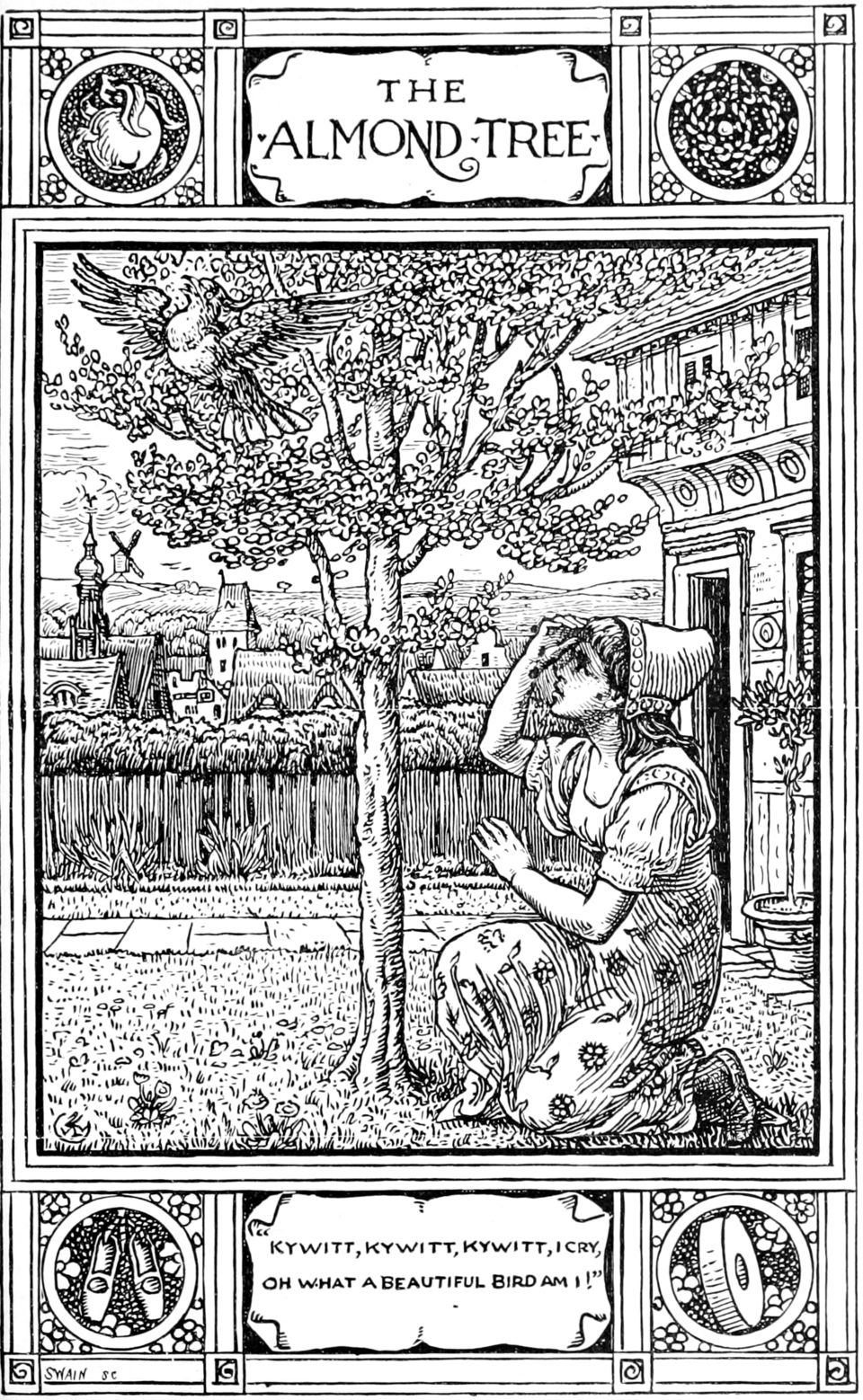
My mother she me slew,
My father ate me too,
But my Sister Margery
Gathered all my bones she cou'd,
And beneath the Juniper-tree
Laid them in a silken shroud.
Keewit! keewit! hie! Hie
What a dainty fine bird am I!
What is notable in these examples is the reality of a person's material presence - flesh, blood, bone. Our bones survive long after we are dead. In the tales, the bones are synonymous with death and consumption, reducing humans to yet another food animal. Disturbing, isn't it? Yet the bones can testify - there is a voice beyond death to bring justice and retribution.
Also notable are the roots in song. In "The Singing Bone," which the Grimms sourced from either Henriette Dorothea Wild or Johanna Christiane Fulda, a wild boar is laying waste to the kingdom. The king sends two brothers to kill it, promising the princess's hand in marriage to the successful brother. The elder has gone to drink himself into bravery, so to speak, while the younger kills the boar. The elder kills the younger in order to claim the prize and buries his bones beneath a bridge. A shepherd finds the bones and crafts a mouthpiece for a horn, which then plays a song:
"
"Ah, friend, thou blowest upon my bone!
Long have I lain beside the water;
My brother slew me for the boar,
And took for his wife the King's young daughter."
- Margaret Raine Hunt's 1884 translation

It's worth mentioning that Australian artist, Shaun Tan, published The Singing Bones in 2015, a collection of clay sculptures inspired by Grimms tales, choosing this tale to represent the heritage of oral storytelling. He writes on his website: "It's a theme that runs through many European fairy tales, and reflects the generational memory of oral story-telling – as dark as it is playful." The Grimms' tale does have earlier roots, though. "The Miller and the King's Daughter," an old ballad of which the Grimms were aware, features two princesses and one drowns the other. A miller finds the body and makes an instrument from her corpse, which then sings of her fate:
What did he doe with her brest bone?
[With a hie downe, downe, a downe-a-]
He made him a viall to play thereupon,
With, &c.
What did he doe with her fingers so small?
With, &c.
He made him peggs to his Violl withall;
With, &c.
What did he doe with her nose-ridge?
With, &c.
Unto his Violl he made him a bridge,
With, &c.
What did he do with her Veynes so blewe?
with, &c.
He made him strings to his Viole thereto;
with, &c.
- James Smith, Wit Restor'd, 1658
Amy Jeffs writes about this tale in Old Songs: Stories of Love and Death from Traditional Ballads, 2025. She points out that songs were not only sung by humans, but were accompanied with instruments often incorporating animal parts, like catgut (not from cats, but from farm animals), giving this tale a little more context.
I can't resist singing bones because these tales reveal the very strong connection between fairytale and song. We tend to think of the oral tradition first in terms of storytellers speaking the tales, but the rhymes and songs are remnants of fairytale's roots in lais and ballads and other songs, songs that filled the air of centuries past. In recovering our past, perhaps it's time to allow our own bones to take a breath and sing our stories.
One of my favourite keepers of the bones is that ultimate fairy-tale witch, the Baba Yaga. What she lacks in consistency - sometimes chaotic evil, sometimes chaotic good, sometimes chaotic neutral - she more than makes up for with her hut on chicken legs. In "Vasilisa the Beauty," the hut is described in The Russian Fairy Book (1907), translated by Nathan Haskell Dole: "The fence around the hut was of men's bones, and the posts were decorated with human skulls. Instead of door-posts were men's leg-bones." In this tale she cries, much like Jack's Giant, "Fu! fu! fu! I smell Russian breath! Who is here?" It's similar to her cry in "The Maiden Tsar," (Afanasyev, Russian Fairy Tales, 1973) which features three Baba Yagas: "Fie, fie... the Russian smell was never heard of nor caught sight of here, but it has come by itself." It is as though such characters can smell an unusual, tasty morsel! There are tales of her eating children, and she certainly threatens to eat Vasilisa. She is also sometimes spoken of as having a bony leg - even a bone leg.
It wouldn't be incorrect to say that Baba is a tale that fairly creaks with bones. She does have a way of decorating with them, living within her own personal graveyard, exposing death as you might display a rose bush.
I keep returning to Baba Yaga as a writer.
May was eaten. No, the Baba Yaga did not gnaw upon her bones, mince her flesh, nor sauté her liver. She ate her anyway. She ate her up in misery, despair and filth. May decayed like a spring leaf in late autumn. When she was no more, Baba polished her bones and hung them from my window.
-"The House That Dreamed Of Wings"
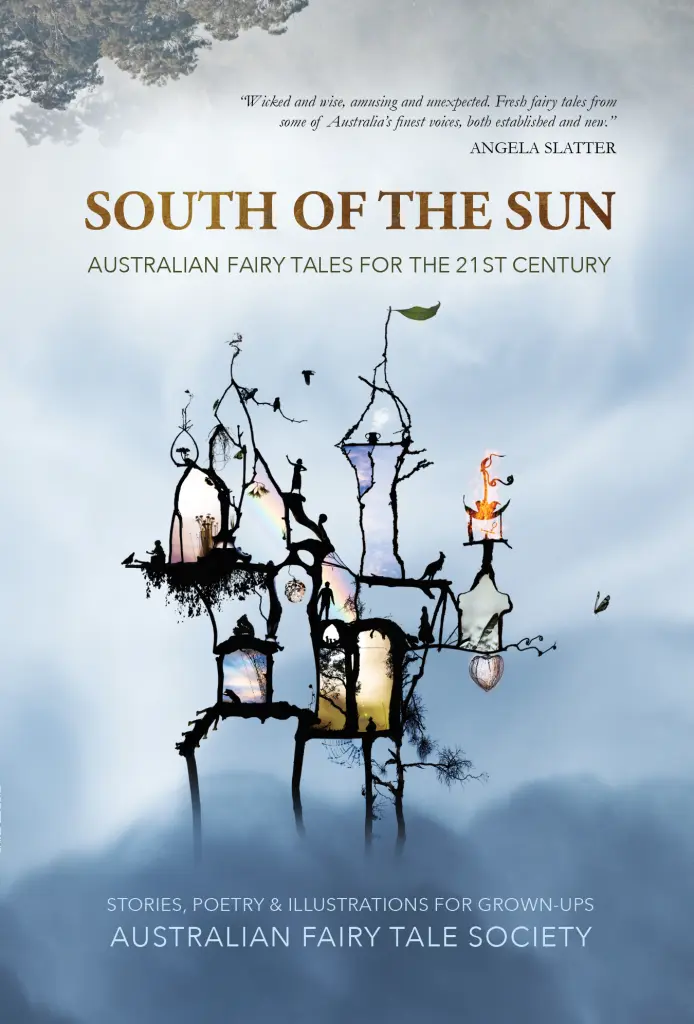

The above is from a story I wrote about Baba Yaga in rural Australia - from the perspective of the house with chicken legs. It accompanied some Baba-inspired jewellery I designed with Lorena Carrington years ago and was also a reward in the South of the Sun: Australian Fairy Tales for the 21st Century Patreon campaign.

I'd been travelling in rural Queensland a lot at the time. It was so very dry and you'd pass the ruins of old houses and barns and so I imagined a Baba Yaga flying through the sky in her mangle (this little variation made its way into my story for South of the Sun too).
Once we had our own farm, I realised just how gothic life could become. Wondering our paddocks, you come across the bones of poor creatures, long dead.
It can be a little unnerving!


And yet, I do pause, thinking of the animals who once breathed upon the land, respecting their deaths. I've recently been reading about the veneration of saint’s bones, too, and the claims of miracles that occur in relation to those relics. Many of the early saints' tales are quite remarkable and do have a whiff of fairytale about them, which isn't surprising, since we didn't exactly tell stories within genres in those days. Visiting the local graveyards, too, where my ancestors are buried, I continue to think about how we still attach importance to the bones of those long dead, venerating our ancestors, cleaning and repairing the graves that stand upon their bones, leaving flowers, and stopping to think of their names and the family stories attached to them.
Next time you go to a graveyard or see some bones, just listen a little carefully. You might hear a song that is better than the latest true crime podcast.


Comments